
Introduction
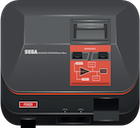
Welcome to our page dedicated to Sega Master System reverse engineering! The Sega Master System was a popular gaming console released by Sega in 1985, and has since become a beloved classic of the gaming world. If you’re interested in learning more about the technical aspects of this console and how it works, you’ve come to the right place.
On this page, we’ve compiled a list of links to other pages that cover various topics related to Sega Master System reverse engineering.
Developer Interviews
One of the best ways to find out what it was like developing games for the SEGA Master System is to look at old developer interviews from Games Magazines published in the 90s.
US Gold Interview
SMS Power has re-posted an interview from Zero magazine issue 7 where they interview the game developers at US Gold on developing the games Impossible Mission and Gauntlet.
Apparently Impossible Mission for the Sega Master System will be on a 128K cartridge which is comprised of:
- 16K Code (Z80 Machine Code)
- 70K Graphics
- 20K Sound
For development hardware they used an ordinary PC with Z80 assembler connected to a Sega Master System via a Z80 Probe which plugs into the CPU slot on the motherboard (instead of the CPU). It also mentions that they use RAM to hold the game data instead of a ROM Chip, so presumably there is some interface between the PC and the RAM chip to be able to write the game data to it. It mentions that this is fast but as as fast as PDS which is another Master System development kit.
In this same interview they comment on Japanese Sega Game developers:
The often dubious quality of some of the Sega games is down to the strange programming habits of the Japanese. Generally there are around six people working on a game for a year. It’s the way developers recruit programmers that is bizarre; they put an ad in the local rag asking for anyone interested in computing to contact them. The developers then train the new recruits and get them to join a team of novices to start work on a game. Established programmers aren’t even considered.
It is a rather odd statement to make, almost sounds like one of the developers was salty about not being recruited for a Japanese Game developer…
You can read the full interview here:
MirrorSoft Interview
One of the best interviews with Sega Master System Developers was in the UK Magazine called S the Sega Magazine, specifically issue 8 where they interview the programmers of MirrorSoft in Bath about their upcoming game Speedball.
You can read the full interview here: S the Sega Magazine - Issue 8 - Back to the Future - Articles - SMS Power
Paul Hutchinson Interview
Game SoundTracks has an interview with Paul Hutchinson where he talks about developing Sega Master System games such as Spider-Man vs. The Kingpin, including details of the development hardware that he was sent from Sega of America.
He programmed the game with a little help from John Kennedy and created all the Music and Sound! He worked from home as a stay-at-home dad so he sent the code to Sega over a Bulletin Board System (BBS).
He used a $2200 Intel 486 DX2 66 CPU with a $300 14” CRT monitor, which is likely what he used to develop his Sega Master System games and then later an Amiga 2000HD for Deluxe Paint (Pixel Art) and Pro-Tracker (Music).
Hardware
The Sega Master System has multiple hardware revisions in its life time along with many different development kits as SEGA themselves didn’t produce an official one for developers to use.
Development Kit Hardware
Unlike other consoles the Sega Master System has very little information online about the hardware game developers used to develop software for it.
Thanks to a Game SoundTracks interview with Paul Hutchinson we know that Sega used to send out ZAX-ICE In-Circuit Emulators along with a modified Sega Master System 1:
The Sega development kit included a ZAX-ICE (In-Circuit Emulator), which plugged into an SMS where the Z80 cpu would be (the SMS top cover was removed in order to achieve that).
We do have information about a third party development kit used for Master System development called the Krisalis development kit:
The Sega Game Gear was a very similar system so some of the development hardware for Game Gear was also used for Master System games, you can find out about Game Gear development hardware in the post below:

Sega Digitizer System
The Sega Digitizer System was a development kit specifically for creating sprites and background tiles officially inside SEGA. It is unclear if they ever sold the system to third party developers.
This was not exclusive to Sega Master System development, it was also used in early sega arcade games, system 1 and system 16 (1986) and all the way up to Mega Drive (it had 3 different versions).
You can find out more including lots of images on Video Games Densetsu: The Sega Digitizer System, a tool used by graphic…
Retail SMS Hardware
The main components of the retail Sega Master System are:
- Clock Signal Generator - Quartz Crystal signal which is split up for timing of each of the individual processors
- Zilog Z80A CPU - Same CPU as Sinclair Spectrum and Amstrad CPC
- 131K Sony ROM Chip - used for BIOS
- 8K NEC RAM Chip - Used for game variables such as player score
- VDP - Video Display Processor (sprites, tiles and scrolling)
- SEGA Sound Chip (3 four-octave sound channels plus white noise generator) and I/O controller
- Two NEC 8K RAM (16K total) chips which store the data for the video chip
For an in-depth look at the SMS Retail hardware architecture check out the excellent post by Copetti.org:

Zilog Z80 Microprocessor
The Z80 processor was a common choice for many home computers and gaming consoles during the early 1980s. It provided the computational power necessary to run a variety of games and applications on the Sega Master System. The Z80’s architecture made it a versatile and widely used processor at the time, allowing developers to create games and software for the console.
Software Development Kit
Officially SEGA didn’t provide much to game developers and expected them to create their own development toolchain, however they did provide the following documentation:
- Sega Mk3 Hardware Reference Manual (Rev1) - The Official Sega Mark III Reference Manual, it contains code snippets for accessing the hardware including add-ons such as the Gun controller
It would be up to the game developers to find their own Z80 Assembler and Linker and write any common library routines for drawing graphics or reading input.
All Posts
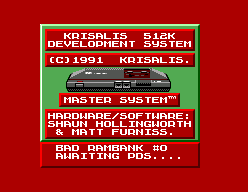
Krisalis Development Kit In the early to mid 1990s Krisalis Software Ltd created their own in-house sega Game Gear and Master System Development Kit.
Shaun Hollingworth and Matt Furniss are credited with creation of the kits hardware and software components....
...
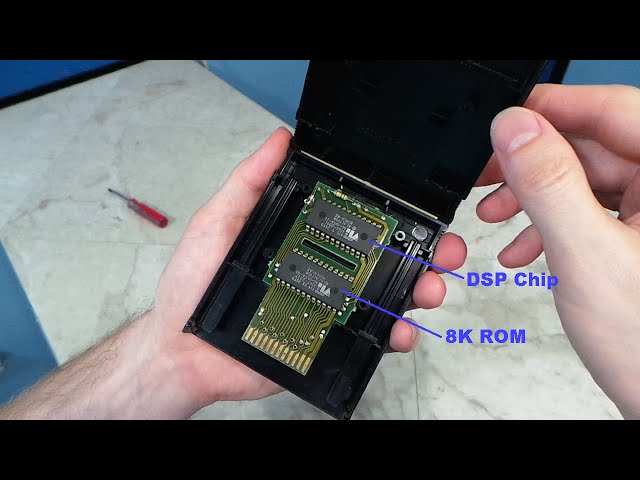
Have you ever wondered what exactly is inside those retro game Cartridges (ROMs)?
In this post we will find out the purpose of ROM cartridges and how they worked.
Advantages of Cartridges Cartridges are not the only format available to...
...
The Z80 Microprocessor: Pioneering Gaming and Beyond The history of the Z80 microprocessor is a tale of innovation and influence that left an indelible mark on the world of computing and gaming.
Developed by Zilog in the late 1970s, the...
...
Magazine Interviews
The magazine index collects developer interviews tagged for this system across all indexed magazines.
| Magazine | Issue | Pages | Developer | Platforms | Description |
|---|---|---|---|---|---|
| Retro Gamer | 23 | pp. 58-61 | Tony Porter | ZX Spectrum, Amstrad CPC, MSX, Sega Master System | Porter describes Gremlin Graphics’ home conversions of Gauntlet and the constraints of each machine. |
| Retro Gamer | 30 | pp. 50-53 | Stefano Arnhold | Sega Master System, Sega Mega Drive | The Tec Toy president discusses the company’s Sega partnership, Brazilian releases, and localisation. |
| Retro Gamer | 32 | pp. 52-59 | Phantasy Star developers | Sega Master System, Sega Mega Drive, Sega Dreamcast | Several Phantasy Star developers discuss the evolution of the Phantasy Star series. |
| Retro Gamer | 124 | pp. 50-55 | Michishito Ishizuka | Arcade, Master System, Mega Drive | The Westone co-founder discusses the studio and Wonder Boy series. |
| Retro Gamer | 144 | pp. 42-45 | Ryuichi Nishizawa | Master System | Nishizawa explains the design of Wonder Boy III: The Dragon’s Trap. |
| Retro Gamer | 151 | p. 105 | Claudio Gabriele Quercia | Master System | Quercia discusses coding Waimanu Scary Monsters Saga for the Master System. |
| Retro Gamer | 155 | pp. 46-55 | Tom Kalinske and Sega staff | Master System, Mega Drive, Saturn, Dreamcast | Former staff recount Sega’s console history and marketing decisions. |
| Retro Gamer | 156 | pp. 20-29 | Yu Suzuki, Steve Lycett and Out Run developers | Arcade, Master System, Mega Drive, PlayStation 2 | Developers discuss the creation and evolution of the Out Run series. |
| Retro Gamer | 157 | pp. 6-7 | Omar Cornut and Ben Fiquet | Master System, PC | The Lizardcube developers discuss remaking Wonder Boy III: The Dragon’s Trap. |
| Retro Gamer | 166 | p. 13 | René Richard | Master System | Richard discusses designing db Electronics’ retro console accessories. |
| Retro Gamer | 166 | pp. 64-71 | David Bishop, Louis Castle and Disney game developers | Mega Drive, SNES, Master System | Developers revisit classic Disney videogame adaptations. |
| Retro Gamer | 167 | pp. 52-61 | Yuji Naka | Master System | Naka revisits the creation of Phantasy Star. |
| Retro Gamer | 177 | p. 32 | Mark Cerny | Master System | Cerny discusses programming for Sega’s Master System. |
| Retro Gamer | 190 | pp. 90-95 | Tony Takoushi | Commodore 64, Master System, Game Gear | Takoushi discusses his game coding, journalism and publishing career. |
| Retro Gamer | 192 | p. 103 | Alexander Vormbrock | Master System | Vormbrock discusses developing the homebrew shooter Flight of Pigarus. |
| Retro Gamer | 203 | pp. 92-97 | Stefano Arnhold | Master System, Mega Drive | The TecToy chairman discusses localising Sega hardware and games for Brazil. |
| Retro Gamer | 209 | pp. 18-27 | Kotaro Hayashida and Rieko Kodama | Master System | The Sega developers recount making Alex Kidd in Miracle World. |
| Retro Gamer | 235 | pp. 18-29 | Ryuichi Nishizawa | Arcade, Master System, PC Engine | The series creator traces the design and history of Wonder Boy. |
| Retro Gamer | 252 | p. 100 | Under 4MHz | Master System, Game Boy, MSX, ColecoVision | The homebrew coder discusses multiformat development methods and upcoming ports. |