
Sega Dreamcast
Edit on Github | Updated: 4th August 2026Introduction to Hacking/Reversing the SEGA Dreamcast
Welcome to our page dedicated to SEGA Dreamcast reverse engineering! The SEGA Dreamcast was a beloved gaming console that was first released in 1998, and has since gained a cult following among retro gaming enthusiasts.
If you’re interested in learning more about the technical aspects of this console and how it works, you’ve come to the right place. On this page, we’ve compiled a list of links to other pages that cover various topics related to SEGA Dreamcast reverse engineering.
Whether you’re interested in understanding the hardware architecture of the console, analyzing game code, or exploring the many mods and hacks that have been created by enthusiasts over the years, you’ll find a wealth of resources and information on the pages we’ve linked to.
So grab your VMU, fire up your Dreamcast, and get ready to dive into the exciting world of SEGA Dreamcast reverse engineering!
History of Dreamcast Hacking
Neperos hosts an article (originally from Retro Revival magazine) that chronicles the rise of the Sega Dreamcast homebrew scene. The piece details how the “MIL-CD” exploit and the release of the Utopia Boot Disc bypassed the console’s copy protection, paving the way for homebrew development tools like KallistiOS and the porting of emulators and media players such as DCDivX and ScummVM.

Bleemcasting: An Interview With Bleemcast! Developer Randy Linden
The Dreamcast Junkyard speaks with Randy Linden, the core developer behind the Bleemcast! emulator. The interview covers the technical challenges of porting the PC emulator to the Dreamcast’s SH-4 architecture, the reverse engineering of the MIL-CD format to bypass Sega’s licensing, and the history behind the unreleased “BleemPod” hardware.

How the Dreamcast’s Security was Hacked (MIL-CD)
This article debunks the common myth that the Dreamcast lacked security, explaining instead how the “MIL-CD” format-intended for interactive music albums-became the system’s Achilles’ heel. We detail how hackers exploited this oversight to bypass GD-ROM authenticity checks, allowing modified game ISOs to run on standard CD-Rs despite the console’s built-in copy protection mechanisms.
Hardware
If you’re keen on reverse engineering SEGA Dreamcast games, it’s crucial to possess a strong comprehension of the hardware that fuels the gaming console. This knowledge will aid in understanding how the software interacts with the hardware and how you can potentially modify or enhance it.
This segment of our guide furnishes you with comprehensive insights and resources on SEGA Dreamcast hardware, encompassing retail, prototype, and development hardware.
Retail Hardware Architecture
Copetti presents a comprehensive “practical analysis” of the Sega Dreamcast’s internal architecture, authored by Rodrigo Copetti. The article provides a deep technical breakdown of the system’s components, including the Hitachi SH-4 CPU’s superscalar pipeline, the PowerVR2’s tile-based deferred rendering GPU, and the AICA sound processor, while also discussing the “MIL-CD” backdoor that enabled the homebrew and piracy scene.

Development Hardware
The Dreamcast arguably had the best development kit that SEGA had ever sold for their consoles, it is just a shame the lifespan of the Dreamcast was cut short.
Unofficial Hardware
Treamcast - Chinese Pirate Sega Dreamcast System Overview
Adam Koralik reviews the “Treamcast,” an unauthorized portable clone of the Sega Dreamcast manufactured in China in 2003. The overview highlights the system’s built-in LCD screen, internal region-free modification, and peculiar hardware quirks, such as the need to manually spin the disc to initiate reading.
Game Software Development
Official Dreamcast Windows CE SDK
GD Workshop
Games
Chicken Run
The full source code for the Dreamcast port of Chicken Run was released and we have a separate post covering the code:
Official Retail Dreamcast Game Source Code
If you are interested in officially released or leaked source code for the Dreamcast check out our other post:
Dreamcast games with Debug Symbols
Games exclusive to the Dreamcast
Wikipedia maintains a list of Dreamcast exclusives - Dreamcast-only games - Wikipedia
Reverse Engineering
Reverse Engineering Ecco the Dolphin with Ghidra
There is an excellent article by Rings of Saturn on reverse engineering Ecco the Dolphin for the Dreamcast, specifically how the cheat codes work via save names: Under the microscope: Ecco the Dolphin - Defender of the Future
Castlevania: Resurrection Dreamcast Reverse Engineering
Sega Dreamcast Info provides a deep dive into the reverse engineering of the unreleased Castlevania: Resurrection E3 1999 prototype. The write-up details the discovery of plain text scripting for AI and level data, the extraction of hidden assets like music and textures, and the technical work required to create playable GDI and CDI images for modern hardware.

Agartha Dreamcast Reverse Engineering
Sega Dreamcast Info details the extensive reverse engineering efforts behind Agartha, an unreleased survival horror game by No Cliché. The write-up explains the technical analysis of the proprietary AGARTHA.PAK file structure, the extraction of hidden assets like the 15-minute video and script files, and the methods used to re-enable debug menus and free camera modes to make the prototypes playable.

All Posts tagged with Dreamcast
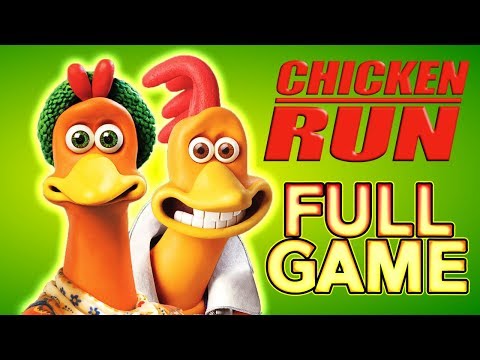
Developed by Blitz Games (formerly known as Interactive Studios Limited) in 2000 as a cross platform action adventure game based on the movie with the same name.
Throughout the engine you will find referenced to the acronym isl (Interactive Studios...
...
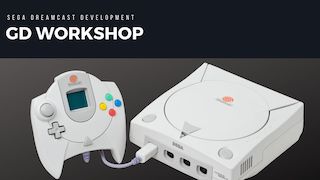
GD Workshop was developed by CrossProducts as a tool to not only burn GD-Rs but also to create virtual GDROM images for use on the DEV.BOX development hardware.
Running GD Workshop Although the Katana development kit Dev.BOX is basically a...
...
Debug symbols pretty much open a game wide open to budding verse engineers.
These files make reverse engineering almost a piece of cake, giving useful names to each of the functions in an executable and sometimes even full local variable...
...
Originally called the Dragon SDK and planned to be the full Operating System (OS) of the dreamcast.
However SEGA decided to go with their own limited BIOS with the Dreamcast instead of a fully functional OS.
So to use WindowsCE...
...
History of Dreamcast Hacking Neperos hosts an article (originally from Retro Revival magazine) that chronicles the rise of the Sega Dreamcast homebrew scene.
The piece details how the “MIL-CD” exploit and the release of the Utopia Boot Disc bypassed the...
...
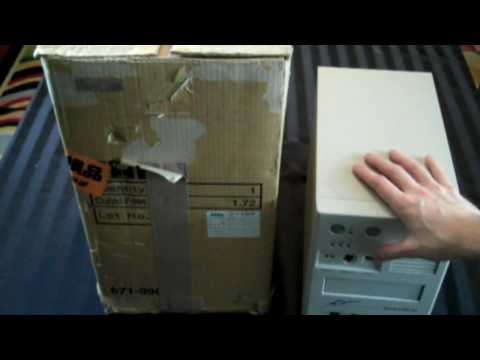
Official Sega Development hardware In Sega’s internal model numbering system for the Dreamcast, the prefix “HKT” is consistently used across various hardware components and peripherals.
While the exact meaning of “HKT” has not been officially disclosed by Sega, it’s widely...
...