

Introduction
Welcome to our page dedicated to Xbox reverse engineering! The Xbox was a gaming console released by Microsoft in 2001, and it quickly became a popular choice for gamers around the world. If you’re interested in learning more about the technical aspects of this console and how it works, you’ve come to the right place.
On this page, we’ve compiled a list of links to other pages that cover various topics related to Xbox reverse engineering. Whether you’re interested in understanding the hardware architecture of the console, analyzing game code, or exploring the many mods and hacks that have been created by enthusiasts over the years, you’ll find a wealth of resources and information on the pages we’ve linked to.
So grab your Xbox controller, and get ready to dive into the exciting world of Xbox reverse engineering!
Game Software Development for the Microsoft Xbox
How long did it take to develop games for the Xbox back in the day?
In the 2003 book Postmortems from Game Developer, the developers of Cel Damage describe a 2-year Xbox development cycle with 16 full-time developers and 12 contractors 1. Given the November 1, 2001 release date, that puts the bulk of development roughly in the late-1999 to 2001 period 1.
The postmortem also gives a useful snapshot of what an original Xbox production looked like at the time:
- Team size - 28 developers in total, split between 16 full-time staff and 12 contractors
- Budget - Approximately $2 million
- Project scale - Around 800,000 lines of code
- Development hardware - 600MHz Pentium III PCs with 256MB of RAM, 30GB hard drives, and Nvidia GeForce graphics cards
- Software stack - Microsoft Visual Studio, 3DS Max, Photoshop, Illustrator, Winamp, and SourceSafe
- Performance and tooling -
pitaSim,Vtune, and Microsoft Visual C++
That is only one data point, but it is still a useful baseline. For an early Xbox title, a 2-year schedule with a sub-30-person team and commodity PC workstations appears to have been enough to ship a retail game 1.
Games
Exclusives
Wikipedia has a list of the games that are still exclusive to the original Microsoft Xbox - Xbox-only games - Wikipedia
Hardware
If you’re interested in reverse engineering software for the Xbox gaming console, it’s important to have a strong understanding of the hardware that powers it. By comprehending the inner workings of the Xbox hardware, you can better understand how the software interacts with the hardware and how you can potentially modify or enhance it.
This section of our guide will provide you with detailed information and resources on the hardware of the Xbox, including retail, prototype, and development hardware.
Retail Hardware
Development Hardware
Reverse Engineering
Console security and disc dumping
Modern Vintage Gamer explains how the original Xbox’s security was defeated. It provides context for the tools and software that became possible once unsigned code could run.
Modern Vintage Gamer describes how cracking groups ripped original Xbox discs. The account complements the security overview with a disc-dumping and preservation workflow.
File Formats
Splinter Cell’s LIN Format Analysis
Landaire investigates the .lin file format used in Splinter Cell: Pandora Tomorrow and Chaos Theory, which had remained undocumented for two decades. The analysis reveals that these files are not traditional archives, but rather linear recordings of memory allocation and read operations designed to optimize streaming from the Xbox’s optical media.

Matching Decompilation
The xboxrecomp decompilation guide uses the toolkit’s analysis and splitting tools to produce one byte-identical assembly file per function. It explains why the original x86 instruction bytes must be retained while readable C replaces functions during matching. This workflow does not require running the static recompiler.
Static Recompilation
Static recompilation translates the original Xbox executable into source code that can be compiled into a native PC program. The approach retains the original game logic while replacing console services such as the kernel, graphics, audio, and input layers with host-platform implementations.
The upstream xboxrecomp toolkit provides an XBE parser, x86 disassembler, function identification, ABI analysis, and a static recompiler that lifts Xbox code into C. The Two Towers Recompiled project uses the toolkit for its game-specific work. The runtime includes compatibility layers for Xbox kernel calls, Direct3D 8, the NV2A graphics processor, DirectSound, the MCPX APU, and XInput. The project requires the user’s own copy of the game and does not distribute game data.
The toolkit also documents its analysis of Microsoft’s Ficl / Fission static recompiler. It examines retail backward-compatibility binaries to compare Microsoft’s ahead-of-time compilation pipeline with the project’s own design. The document is a technical case study, not a guide to running xboxrecomp.
All Posts

The Official software development kit for the original xbox was called the XDK (Xbox Development Kit).
This was only provided to developers on their Xbox Developer Services website (xds.xbox.com) and not via CD/DVD.
This was mainly due to the frequency...
...
If you are very lucky indeed then the game you want to reverse engineer comes with full debug symbols in the form of a Program Database file or PDB for short.
These files tend to be created by Microsoft Visual...
...
Introduction On the 21st August 2021 the full source code to the classic GTA clone staring The Simpsons was released online.
This included both the C++ source code plus the editable asset files in Maya format!
This post will cover...
...
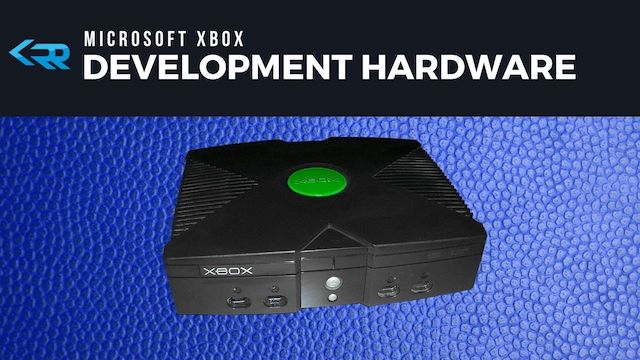
Alpha Development Hardware During the development of the Xbox console, the games aiming to be launch titles required a system to develop for.
The first development kit that Microsoft sent out to the early developers was the Alpha I.
It...
...
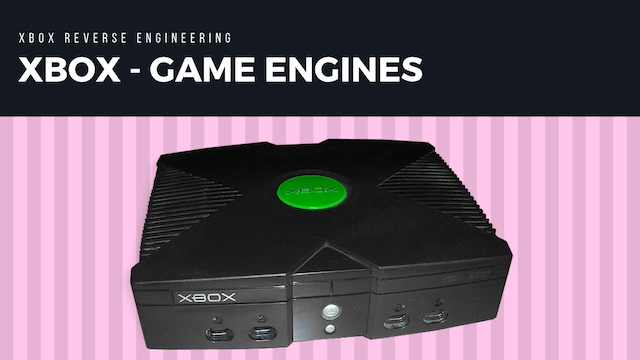
Introduction When the Xbox came out in 2001 most game developers were still getting used to the new layer of abstractions and code re-use provided by the superior hardware of consoles compared to the previous generations.
Game engines have always...
...
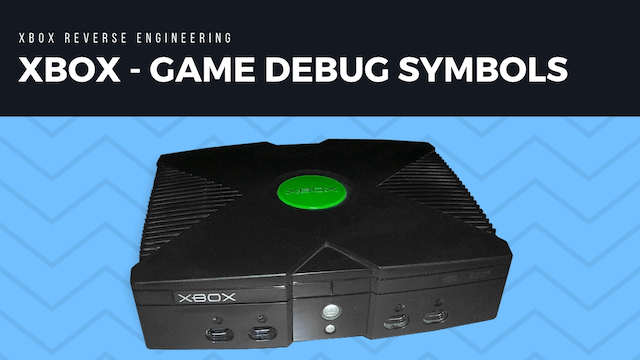
Debug symbols left in games make reverse engineering almost a piece of cake, giving useful names to each of the functions in an executable and sometimes even full local variable naming and source code references.
However most developers are very...
...
Magazine Interviews
The magazine index collects developer interviews tagged for this system across all indexed magazines.
| Magazine | Issue | Pages | Developer | Platforms | Description |
|---|---|---|---|---|---|
| Retro Gamer | 48 | pp. 38-43 | Keith Ramsdale and other EA staff | PC, PlayStation 2, Xbox, Wii | Interview about Electronic Arts in the 2000s, part three. |
| Retro Gamer | 56 | pp. 88-93 | David Perry | PC, Xbox | Interview about the later history of Shiny Entertainment. |
| Retro Gamer | 77 | pp. 84-89 | Neil Thompson | Amiga, PlayStation 3, Xbox, FM Towns | Desert Island Disks interview about his game development career. |
| Retro Gamer | 120 | pp. 66-71 | Lorne Lanning | PlayStation, Xbox | Lanning discusses Abe’s Oddysee, the Oddworld series, and its return. |
| Retro Gamer | 135 | pp. 86-89 | Halo developers | Xbox | Former Bungie developers explain the design of Halo: Combat Evolved. |
| Retro Gamer | 150 | p. 36 | Greg Zeschuk | Xbox | Zeschuk discusses the design and technical challenges of Star Wars: Knights of the Old Republic. |
| Retro Gamer | 152 | pp. 86-89 | Tim Schafer | Xbox, PC | Schafer recalls the creation of Psychonauts and the early years of Double Fine. |
| Retro Gamer | 154 | pp. 78-85 | Yohei Shimbori | Arcade, Sony PlayStation, Xbox | The Team Ninja developer discusses the design and evolution of Dead Or Alive. |
| Retro Gamer | 155 | pp. 92-97 | Ed Fries | Atari 8-bit, Xbox | Fries discusses programming early games and leading Microsoft’s Xbox games division. |
| Retro Gamer | 165 | pp. 86-89 | Alex Ward | PlayStation 2, Xbox | Ward explains Criterion’s development of Black. |
| Retro Gamer | 172 | pp. 88-91 | Andrew Brazier, Ed Kay, Chris Gray and Gareth Clarke | PC, Xbox | The Headfirst team recalls developing Call of Cthulhu: Dark Corners of the Earth. |
| Retro Gamer | 174 | pp. 20-29 | Seamus Blackley, Ed Fries and Xbox developers | Xbox | Microsoft’s original Xbox team recalls creating and launching the console. |
| Retro Gamer | 174 | pp. 82-87 | Chris Seavor | Nintendo 64, Xbox | Seavor revisits the making of Conker’s Bad Fur Day and Live & Reloaded. |
| Retro Gamer | 177 | p. 30 | Seamus Blackley | Xbox | The Xbox codesigner recalls the console’s development. |
| Retro Gamer | 180 | pp. 88-91 | Raphael Colantonio and Christophe Carrier | PC, Xbox | Arkane’s founders recall developing Arx Fatalis. |
| Retro Gamer | 181 | pp. 94-99 | Andy Beale | ZX Spectrum, Mega Drive, PlayStation, Xbox | Beale discusses his game development career. |
| Retro Gamer | 193 | pp. 84-87 | Scott Pease | PlayStation 2, Xbox | Pease recalls Neversoft’s development of the western action game Gun. |
| Retro Gamer | 194 | pp. 18-27 | Alex Ward and Burnout developers | PlayStation 2, Xbox | Criterion developers revisit the creation of Burnout 3: Takedown. |
| Retro Gamer | 194 | pp. 84-87 | Michael Field and John Botti | PlayStation 2, Xbox | Black Ops Entertainment staff recall developing The X-Files: Resist or Serve. |
| Retro Gamer | 198 | pp. 78-83 | Elisabeth Pellen and Nathalie Moschetti-Nogard | PC, PlayStation 2, Xbox, GameCube | The writer and art director discuss adapting the comic XIII into a shooter. |
| Retro Gamer | 199 | pp. 90-95 | François Coulon | PC, PlayStation 2, Xbox | Coulon recalls developing the original Splinter Cell. |
| Retro Gamer | 200 | pp. 82-83 | Tom Hall, Martyn Chudley and Steve Lycett | PC, Xbox | Developers revisit the growth of online games and console network services. |
| Retro Gamer | 202 | pp. 20-29 | Greg Zeschuk, James Ohlen, Drew Karpyshyn and David Falkner | Xbox, PC | BioWare staff revisit the development of Star Wars: Knights of the Old Republic. |
| Retro Gamer | 212 | pp. 66-69 | Jens Andersson and Mikael Saker | Xbox, PC | Starbreeze staff discuss the technology and design of The Chronicles of Riddick: Escape from Butcher Bay. |
| Retro Gamer | 214 | pp. 90-97 | Mike Archer | PlayStation 2, Xbox | Archer reflects on his work overseeing wrestling videogames at Acclaim and WWE. |
| Retro Gamer | 215 | pp. 82-85 | David Perry | PlayStation 2, Xbox, GameCube, PC | Perry revisits Shiny Entertainment’s ambitious film tie-in Enter the Matrix. |
| Retro Gamer | 218 | pp. 88-95 | David Doak and Free Radical Design developers | PlayStation 2, GameCube, Xbox | The team revisits the creation and evolution of the TimeSplitters series. |
| Retro Gamer | 220 | pp. 86-89 | Patrick Lipo and Tom Odell | GameCube, PlayStation 2, Xbox | Raven designers recall making the action role-playing game X-Men Legends. |
| Retro Gamer | 222 | pp. 84-89 | Richard Rouse III | PC, PlayStation 2, Xbox | Rouse discusses the design and development of The Suffering games. |
| Retro Gamer | 223 | pp. 20-29 | Chris Foster, Matt Omernick and other Star Wars game developers | PC, Xbox, PlayStation 2 | Developers revisit the design of Star Wars games including Knights of the Old Republic, Jedi Outcast and Battlefront. |
| Retro Gamer | 223 | pp. 90-97 | Jason Wiggin, Eric DeMilt, David Maldonado and Jon Hales | PlayStation 2, Xbox, GameCube | Black Isle and Snowblind veterans discuss developing the Baldur’s Gate: Dark Alliance games. |
| Retro Gamer | 227 | pp. 24-35 | Ed Fries, Steve Abeyta, Stefan Sinclair and Jen Taylor | Xbox, PC | The developers and performer revisit the technology, art and voice work of Halo. |
| Retro Gamer | 227 | pp. 86-89 | Emmanuel Valdez, Chris Ulm, Paul O'Connor and Farzad Varahramyan | PlayStation 2, Xbox | High Moon staff revisit creating the supernatural shooter Darkwatch. |
| Retro Gamer | 228 | pp. 86-89 | Hudson Piehl, Jason Epps and Scott Evans | PlayStation 2, GameCube, Xbox | Developers revisit The Lord of the Rings: The Two Towers. |
| Retro Gamer | 228 | pp. 92-97 | Tim Schafer | PC, PlayStation 2, Xbox | Schafer discusses creating Psychonauts and returning to its world for the sequel. |
| Retro Gamer | 229 | pp. 90-95 | Bret Robbins and Arcadia Kim | PlayStation 2, GameCube, Xbox, PC | EA developers explain how they adapted The Lord of the Rings: The Return of the King. |
| Retro Gamer | 231 | pp. 74-79 | Martyn Chudley | Dreamcast, Xbox, Xbox 360 | Chudley traces the design and evolution of the Project Gotham Racing games. |
| Retro Gamer | 232 | pp. 86-91 | Christopher Mitchell, Nigel Brooke and Steve Bocska | GameCube, PlayStation 2, Xbox, PC | The Radical Entertainment team revisits The Simpsons: Hit & Run. |
| Retro Gamer | 238 | pp. 78-83 | Jordan Weisman and Bill Morrison | PC, Xbox | The designers trace the evolution of Crimson Skies. |
| Retro Gamer | 241 | pp. 86-91 | John Hodskinson | PlayStation 2, Xbox, PC | The lead programmer recounts creating Lego Star Wars: The Video Game. |
| Retro Gamer | 247 | pp. 20-29 | Steve Lycett, Phil Rankin and Pete Ellacott | Xbox, PlayStation 2, PSP, PC | Sumo Digital developers recount porting and extending Sega’s OutRun 2. |
| Retro Gamer | 247 | p. 24 | Richard Jacques | Xbox | Jacques discusses rearranging the OutRun music for the Xbox version of OutRun 2. |
| Retro Gamer | 249 | pp. 86-91 | Darren Chisum and Jeff Pidsadny | PC, PlayStation 2, Xbox | The designers chart the evolution of Rockstar’s Midnight Club racing games. |
| Retro Gamer | 250 | pp. 18-43 | Rare developers past and present | ZX Spectrum, NES, SNES, Nintendo 64, Xbox, Xbox 360 | Rare veterans trace the studio’s game-development history, from Ultimate to its modern projects. |
| Retro Gamer | 250 | pp. 80-85 | Obbe Vermeij | PlayStation 2, PC, Xbox | Vermeij explains how Grand Theft Auto: Vice City grew from a planned GTA III add-on. |